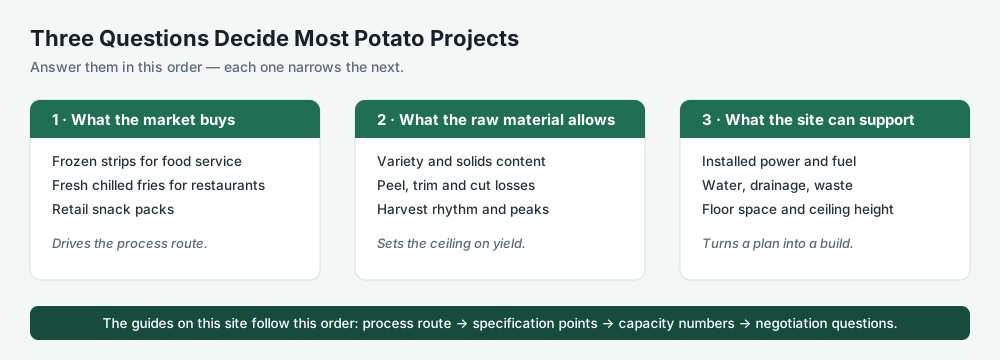
Each guide covers one decision block. Read them in order for a new plant, or jump to the topic you are negotiating right now.
Line planning
French Fries Production Line
From raw potato intake to frozen or fresh-packed fries: the stage sequence, chilled vs frozen process routes, and how each stage constrains the next.
Read the guide →
Small factory planning
Small Factory Fries Line
Questions to ask before buying a small french fries line: product route, capacity, labour, utilities, layout and RFQ details.
Read the guide →
Process control
French Fries Blanching Process
Why blanching affects colour, texture, oil performance and freezing stability — and what buyers should ask before selecting the line.
Read the guide →
Process control
Drying Step
Why a fries line dries twice: dewatering after cutting and surface drying after blanching, what each step protects, and what to specify.
Read the guide →
Process control
Frying Oil Management
How oil temperature, filtration, loading, heat source and cleaning access shape cost and product consistency in a fries line.
Read the guide →
Utilities
Water & Effluent Planning
What drives water use in a potato line — crop soil load, cutting solids, blanching — plus drainage, floor slope and the effluent questions to settle before you buy.
Read the guide →
Line planning
Potato Chips Production Line
Slicing, frying, de-oiling, seasoning and packing — how the classic chips line is built, and where most capacity and quality problems actually start.
Read the guide →
Equipment
Equipment Selection
What to compare on fryers, de-oilers, seasoners and packing machines — and why a specification sheet matters more than a product name.
Read the guide →
Investment
Capacity & Investment
How to size a line from peak raw potato supply instead of average sales, and which numbers a serious quotation must state.
Read the guide →
Investment
Payback Check
How to test an investment case before you commit budget: the numbers you must own, what belongs in the investment figure, and what to ask about any payback claim.
Read the guide →
Buying terms
Delivery Terms & Landed Cost
What a price actually covers and where it stops: the five points to fix before comparing offers, and the cost blocks that stay with the buyer under every term.
Read the guide →
Installation
Installation Readiness
The work that has to finish on your side before the machines arrive: building works, utility capacity at the machine, access and lifting, crew readiness and permits.
Read the guide →
After the order
Spare Parts & Warranty
The questions to send before you sign: how the parts list should be grouped, what a wear interval is based on, and what a warranty clause has to state.
Read the guide →
RFQ preparation
Quotation Checklist
Turn your product, capacity, utilities, packing and acceptance requirements into a cleaner supplier request.
Prepare the checklist →
Answers
Buyer FAQ
Straight answers to the questions buyers ask most: semi-auto vs full-auto, heating source, yield, water use and more.
Read the FAQ →
Context
About This Site
Who writes these guides, how they relate to the HENAN WEITUO equipment site, and how to use both together.
Learn more →