Most delays on a new potato line are not caused by the machines but by a site that was not ready on the day they arrived: an unfinished floor, an electrical supply that existed only on paper, a door the largest piece would not pass.
This page covers the buyer's own critical path — the work on your side between order confirmation and the first saleable pack. It sits beside the delivery terms guide, which settles what the price covers, and the RFQ checklist, which settles what you send before a price exists.
1. Two schedules, and only one of them is yours
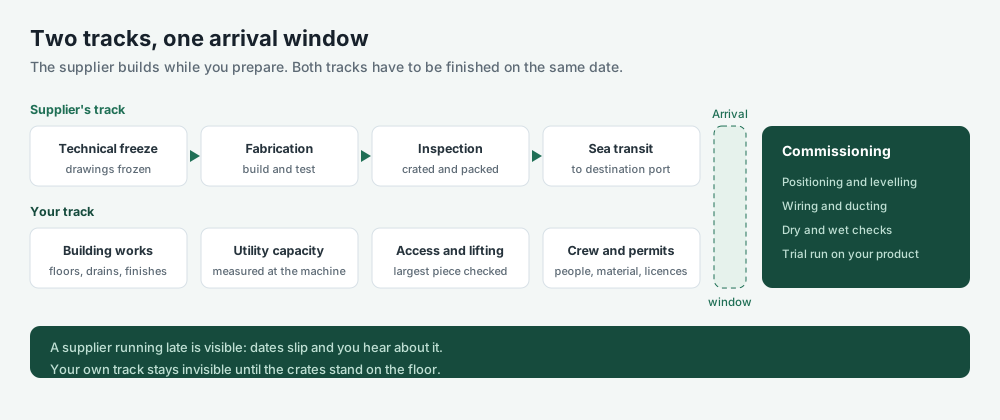
From the moment an order is confirmed, two tracks run side by side. The supplier's is technical freeze, fabrication, inspection, packing, loading and the sea leg. Yours is the building, the utilities, the access route, the crew and the permits.
Only one of the two is visible. A supplier running late shows up as slipping dates you hear about; a buyer running late stays invisible until the crates stand on the floor. Both tracks meet on one date: the day the equipment can be brought to its position.
2. Work backwards from the date you want saleable product
Start from the date you need the first saleable pack — a launch, a supply agreement, the start of a season. Deduct commissioning and the trial run, installation, unloading and inland movement, destination clearance, then ocean transit. What remains is the latest date the machines can leave the factory.
That single subtraction turns a vague "a few months" into a contract date.
The events worth fixing in writing
Name six points rather than assuming them: the technical freeze date, after which changes cost money and schedule; the inspection date; the loading date; the arrival window; the commissioning window; and who answers for each on each side. Tie them to verified work — an inspection report, a loading document — not to calendar dates.
3. Five workstreams that must finish before the machines arrive
Building and civil works
Floor level and load-bearing capacity under the heaviest units, drainage trenches and their slope, finishes fit for a food area, openings for exhaust and ducting. This workstream is discovered late because it usually belongs to a building contractor. The fries line process guide lists which stages drive the water and drainage load.
Utility capacity measured at the machine
The figures that matter sit at the point of connection, not at the site boundary: available power against installed load, voltage and phase standard, water pressure and flow, drainage capacity, the frying heat source and its supply, compressed air and ventilation. A supply adequate at the gate can be inadequate at the machine once your own load is added, so have your electrician measure and record it. The equipment site sets out the wider picture in its note on utility planning for a food processing line.
The access and lifting route
One piece decides the route: the largest single unit. Its height and width, the turning radius from gate to final position, floor loading along the way and the lifting equipment available locally are all checked before the crate is booked. If it can only enter through a wall, the wall works belong on your list — months earlier, not on the delivery morning.
Crew, cleaning and trial-run material
Decide who runs the line on the shift, who gets trained, and how many people it needs. Cleaning access belongs to the same question: a line that cannot be cleaned safely will not stay in production long. The trial run then needs material on site — potatoes of the variety you intend to buy, oil and packaging.
Documents and permissions that move slower than the equipment
Import registration and a customs broker, the electrical connection at the required capacity, the licence to operate, the effluent discharge consent. Each is handled by someone else, and the slowest one sets your real start date.
4. What legitimately waits for arrival
Some work can only be done on site: positioning and levelling, assembling sections that travel in parts, wiring and ducting, dry and wet commissioning, the trial run on your own product, operator training. The split between on-site and remote installation work is worth settling during quotation, not during commissioning.
What should never wait is short enough to repeat: civil works, utility capacity, permits, lifting equipment and the people to be trained. Any one of them can turn a short commissioning into a long one.
5. The segments you do not control
Three parts of the route move for reasons outside both parties: clearance at the port of departure, the sea leg, and clearance at the destination with inland movement. At the destination end, time also turns into money: free time expires and storage charges run against whoever holds the goods.
You cannot schedule those segments, but you can decide in advance what happens if the window slips: a later window agreed in writing, one named person tracking the shipment, and a decision about which of your workstreams absorb the slip.
6. A pre-arrival checklist with one owner per line
A task without a named owner is an open question, and the items handled by other people deserve the earliest dates.
| Must be finished | Owner | Done when you can show |
|---|---|---|
| Floor, drains and finishes | Your building contractor | Finished surfaces and tested drainage |
| Power, water, fuel and air at the machine | Your electrician | Measured values at the connection point |
| Access and lifting route | You, with the lifting contractor | Route checked against the largest piece |
| Crew and trial-run material | You | Named operators available, material on site |
| Documents, licences and consents | Your broker and you | Documents ready, approvals in hand |
7. Frequently asked questions
When should site preparation start for a fries line?
Before the order is placed. Civil works, utility upgrades and permits handled by other people usually take longer than the equipment does, and none can be finished while the machines wait in crates.
Can a fries line be installed and commissioned in phases?
Yes, if the building, power supply and layout were planned for the full route from the beginning. Phasing works when space, drainage and electrical capacity for the later stages are already reserved.
What happens if my site is not ready when the machines arrive?
The goods wait, and the cost of waiting falls to whoever the contract puts it on: standing or storage charges and a second mobilisation for the installation crew.