Product names tell you almost nothing. Two machines called "continuous fryer" can differ in oil capacity, temperature control, filtration and material grade — and those differences decide your running cost for years. This guide lists the specification points worth demanding for the four machines that dominate a potato line's budget and quality.
1. Fryer (batch or continuous)
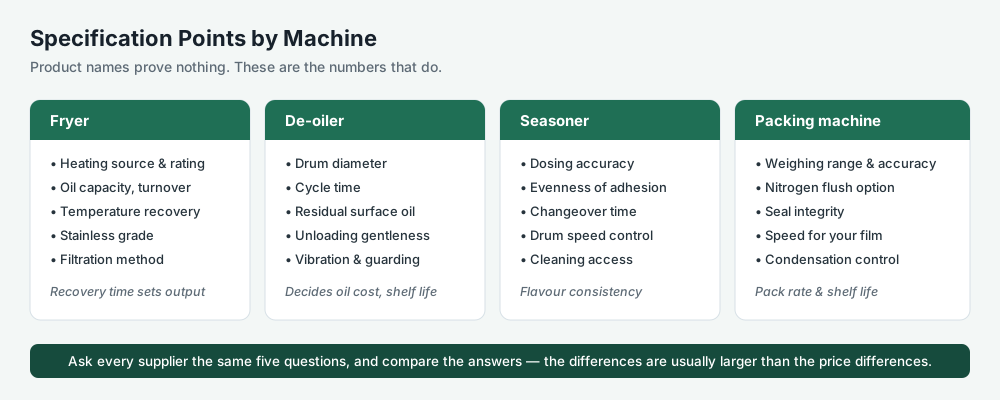
- Heating source and installed power or burner rating, matched to the supply available at your site
- Oil capacity and oil turnover rate — fresher oil means better colour and flavour
- Temperature control accuracy and recovery time after a cold load enters
- Material grade of the pan and hood (food-grade stainless throughout, weld quality)
- For continuous fryers: belt width, speed range and how easily the belt is cleaned
- Filtration arrangement — how oil is filtered in normal running, and how often the filter is changed
A practical test when comparing fryers: ask each supplier how many minutes the pan takes to recover its set temperature after a full cold load. Machines that recover slowly force operators to run cooler or to load less, and both reduce real output below the nominal rating.
2. De-oiler (centrifugal)
- Drum diameter and cycle time — the de-oiler must absorb the fryer's output, not a lab average
- Residual surface oil after a cycle, verified on your own product in a sample test
- Unloading method and how gentle it is on fragile chips
- Balance and vibration behaviour at speed, plus guarding and interlocks
De-oiling is where oil cost and shelf life are decided. A de-oiler that matches the fryer's rhythm keeps surface oil consistent through the shift; one that is undersized forces product to wait, and waiting product either keeps absorbing oil or cools into a greasy surface.
3. Seasoning machine (batch or continuous drum)
- Dosing accuracy and how evenly powder adheres at your target throughput
- Changeover time between flavours, and how quickly the drum and doser clean
- Whether the drum speed and inclination are adjustable for fragile products
4. Packing machine (vertical form-fill-seal or vacuum)
- Weighing range and accuracy at your pack sizes, with multihead weigher options
- Nitrogen flush capability for retail chips packs
- Seal integrity at your bag material, and speed stated honestly for that material
- For frozen or chilled products: packing temperature requirements and condensation control
5. Material, hygiene and maintenance questions
Specification sheets rarely mention the details that decide whether a machine survives five years in a wet, salty environment. Ask about the stainless grade used for product-contact parts, how frames and panels are finished, which parts are wear items with published replacement intervals, and how a maintenance technician reaches bearings, seals and drives. Machines that are hard to clean or hard to service quietly add cost every month.
6. Questions that reveal a supplier's level
HENAN WEITUO publishes machine-level pages — for example the continuous fryer, batch seasoning machine and round pot fryer — that show what a properly documented specification looks like. Using one supplier's documentation as a checklist against another's quotation is a fair and effective tactic.
For the process context around these machines, see the fries line guide and chips line guide on this site.